When facing financial hardship, understanding how to get your short sale approved faster can mean the difference between a controlled exit from your home and the devastating impact of foreclosure. The process can feel overwhelming, filled with complex paperwork and long waits for lender decisions. For homeowners in Marion County, navigating the specific requirements of local and national banks adds another layer of stress to an already difficult situation. In this blog post, Ocala real estate expert Scott Coldwell discusses proven strategies that have helped hundreds of Marion County homeowners get their short sale approved faster.
A short sale involves selling your property for less than the outstanding mortgage balance, with your lender’s approval. This option helps you avoid the severe credit damage of foreclosure while addressing situations where you owe more than your home’s current market value.
Key Takeaways
- A complete and accurate document package submitted on the first attempt prevents initial delays and keeps your file moving forward
- Strategic pricing at or slightly below market value encourages quick offers and signals realistic expectations to the lender
- A clear, factual hardship letter provides the necessary justification for the lender to accept a loss on your loan
- Partnering with the best realtor in Ocala who specializes in short sales ensures expert negotiation throughout the process
To get your short sale approved faster in Ocala, you must submit a complete and accurate hardship package upfront, price your home strategically based on current market data, and maintain consistent communication with your lender. Working with an experienced local real estate agent who specializes in distressed properties is critical to navigating these steps efficiently.
To Discuss Your Home Sale or Purchase, Call or Text Today and Start Packing!
Scott Coldwell has successfully negotiated over 200 short sales in North Central Florida, working directly with major lenders to help distressed homeowners avoid foreclosure. His team’s proven systems and established lender relationships typically achieve approval decisions 30-40% faster than the Marion County average, with many cases resolved within 90-120 days rather than the typical 180+ day timeline.
Ocala Short Sale Timeline: 4 Phases from Hardship to Closing
Phase 1: Document Preparation
2 – 4 WeeksPhase 2: Property Marketing
1 – 3 MonthsPhase 3: Lender Review & Negotiation
1 – 3 MonthsPhase 4: Closing
30 – 45 DaysThe Complete Short Sale Document Checklist
Submitting a perfect hardship package on the first try is the most important factor for a fast approval. Lenders report that incomplete or incorrect paperwork is the primary reason for delays, often pushing timelines back by 30 to 60 days. Your file simply sits in a queue while the bank waits for missing items, during which time foreclosure proceedings may continue advancing.
A comprehensive package gives the lender everything they need to make a decision without having to issue multiple requests for information. This proactive approach demonstrates that you are serious and organized, which can significantly influence the speed and outcome of the review. Additionally, complete documentation prevents your file from being reassigned to new negotiators, which often restarts the review timeline from scratch.
Essential documents required for an Ocala short sale include:
- Hardship Letter: A detailed, personal explanation of your financial situation with specific dates and circumstances
- Financial Statement: A standardized form from the lender detailing your income, assets, and debts
- Two Years of Tax Returns: Complete federal returns with all schedules and W-2 forms
- Two Months of Pay Stubs: Recent proof of your current income from all sources
- Two Months of Bank Statements: For all accounts, showing all pages including ending balances
- Signed Purchase Offer: A valid contract from a qualified buyer for your property
- Estimated Settlement Statement: A preliminary closing statement (HUD-1) prepared by a title company
- Comparative Market Analysis: Recent sales data supporting the proposed sale price
“One of the biggest mistakes I see Ocala homeowners make is submitting an incomplete package, thinking they can provide missing items later. Banks put incomplete files at the bottom of the queue. When we submit a complete package upfront, we typically get an initial lender response within 7-14 days instead of waiting 30-45 days.” – Scott Coldwell
How to Write a Hardship Letter That Gets Approved
Your hardship letter is the narrative that explains the “why” behind your short sale request. It provides the human context for the financial data, outlining the specific, verifiable circumstances that prevent you from affording your mortgage. A well-written letter is factual, concise, and compelling, giving the lender’s loss mitigator the justification they need to approve the sale.
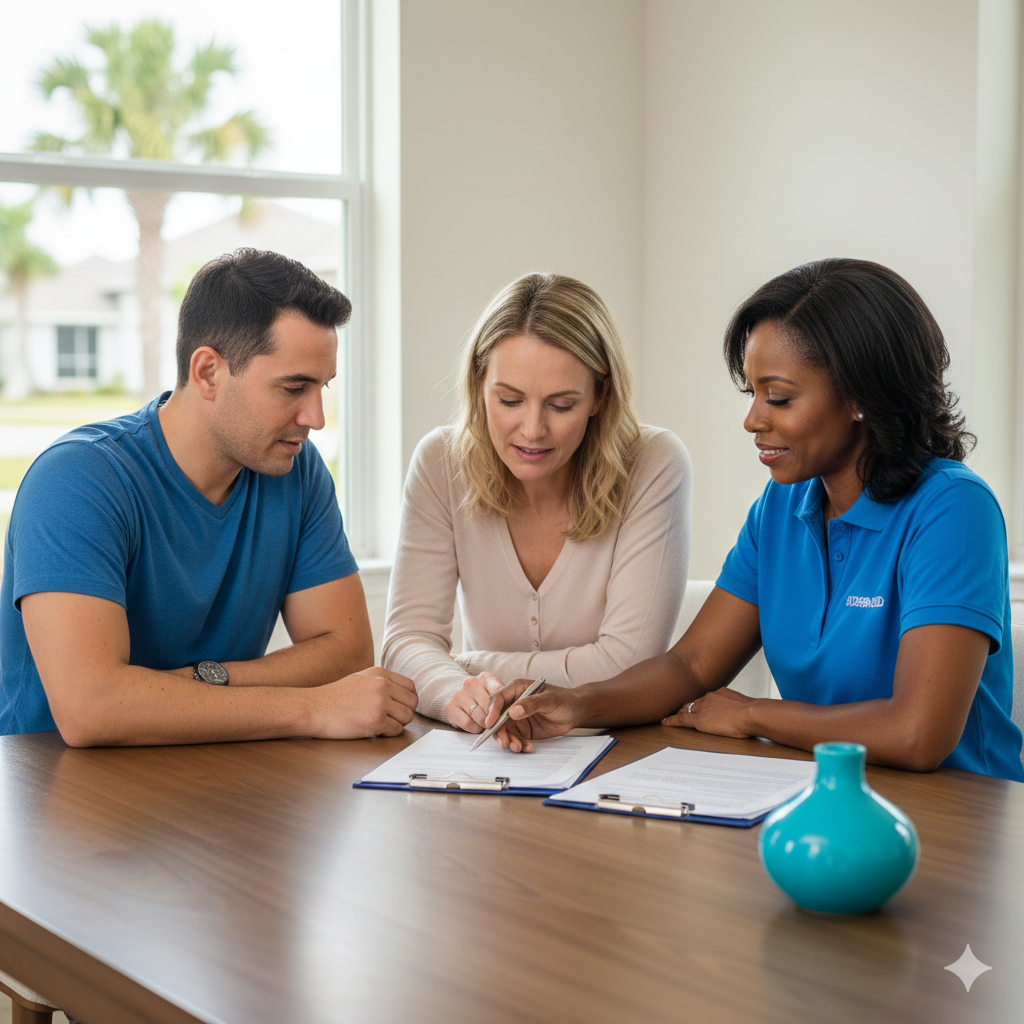
This document should clearly detail the timeline of events that led to your financial distress. Vague statements are often ignored; specific dates, figures, and events are much more powerful. For example, instead of saying you had a reduction in income, state that your hours were cut on a specific date, resulting in a monthly income loss of a precise dollar amount.
To write an effective hardship letter, follow these guidelines:
- Be Honest and Specific: Detail the exact cause of your hardship, such as job loss on a specific date, medical emergency with costs, divorce proceedings, or a failed business with documentation
- Keep it Professional: Avoid blaming the lender or using emotional language that undermines your credibility
- Explain Your Attempts to Resolve: Mention any steps you took to avoid default, like depleting savings accounts, seeking additional work, or cutting expenses
- State Your Goal Clearly: End the letter by formally requesting approval for the short sale as the best solution for both parties
- Include Supporting Documentation: Reference attached medical bills, termination letters, or other proof that validates your hardship
Strategic Pricing to Accelerate Lender Approval
Pricing your home correctly is a critical step that directly impacts the speed of your short sale approval. Lenders will order their own valuation, known as a Broker Price Opinion (BPO), to determine the property’s current market value. If your submitted purchase offer is significantly lower than the BPO, it will trigger red flags and lengthy reviews or outright rejection.
To achieve this, your real estate agent must conduct a thorough home valuation using recent, relevant comparable sales in your specific Ocala neighborhood. An offer priced at or just below this data-driven market value is more likely to be seen as reasonable by the lender. Overpricing the home will lead to no offers and extended marketing time, while significant underpricing will be rejected by the bank as suspicious or collusive.
Key pricing considerations for Ocala short sales:
- Recent Comparable Sales: Properties sold within the last 90 days in your immediate neighborhood
- Property Condition: Adjust for deferred maintenance, repairs needed, or upgrades that affect value
- Days on Market: Homes that sit longer typically indicate overpricing that delays approval
- Seasonal Market Factors: Ocala’s slower summer months may require more aggressive pricing
- Competing Inventory: The number of similar Ocala homes for sale in your area affects buyer interest
Ocala Short Sale vs. Foreclosure: Understanding Your Options
| Criteria | Short Sale | Foreclosure |
|---|---|---|
| Credit Score Impact |
85-160 point drop. Reported as “settled for less than full balance.”
|
200-400 point drop. A severe event that remains on your report for 7 years.
|
| Timeline to Completion |
Typically 90-180+ days, dependent on lender response times and offer acceptance.
|
A lengthy legal process that can take many months or even years to fully resolve.
|
| Deficiency Judgment Risk |
Often waived. An experienced negotiator can secure a full deficiency waiver from the lender.
|
High risk. Lenders in Florida have the right to pursue a judgment for the remaining balance.
|
| Control Over Process |
You are in control. You hire the agent, market the home, and approve the buyer’s offer.
|
No control. The lender and the court system dictate the timeline and outcome.
|
| Future Home Purchase |
Eligible in 2-3 years for an FHA-backed loan with re-established good credit.
|
Waiting period of 5-7 years before being eligible for most mortgage products.
|
| Emotional Stress Level |
Stressful, but provides a proactive solution and a path to a dignified exit from the property.
|
Extremely high stress due to public notices, uncertainty, and the potential for forced eviction.
|
| Legal/Court Involvement |
Minimal. The process is handled between you, your agent, the buyer, and the lender.
|
Formal lawsuit filed by the lender, requiring court appearances and legal proceedings.
|
Understanding Florida’s Deficiency Judgment Protections
One of the biggest fears for homeowners in a short sale is the possibility of a “deficiency judgment.” This occurs when the lender sues the homeowner for the difference between the sale price and the remaining mortgage balance. However, Florida has specific laws that provide a layer of protection, and an experienced negotiator can often secure a full waiver of this risk in the approval letter.
Under Florida Statute 702.06, the ability for a lender to pursue a deficiency is established in foreclosure cases, but short sales create an opportunity for different terms. The most critical part of any short sale negotiation is getting the lender to agree in writing to waive their right to pursue a deficiency. This language in the approval letter is non-negotiable and provides the homeowner with a clean break, allowing them to move forward without the threat of future collections or lawsuits.
An agent with deep experience in the North Central Florida real estate market understands how to make this waiver a condition of the sale. They build a strong case that accepting the short sale offer is a better financial outcome for the bank than a costly and uncertain foreclosure process. Furthermore, they can reference precedent cases and lender policies to support the waiver request, increasing the likelihood of approval.
“Many homeowners don’t realize that negotiating a deficiency waiver is absolutely possible in a Florida short sale. In over 200 cases, we’ve successfully secured full waivers for the majority of our clients, protecting them from any future liability. This requires knowing which lenders have established policies for waivers and how to present the case in a way that makes business sense for the bank.” – Scott Coldwell
Maintaining Consistent Communication with Your Lender
Once your short sale package is submitted, the waiting begins. However, this doesn’t mean you should sit back passively. Lenders are juggling thousands of files, and yours can easily fall through the cracks without regular follow-up. Consistent, professional communication keeps your file active and demonstrates your commitment to the process.
Your agent should establish a regular follow-up schedule, typically calling the lender’s loss mitigation department every 5-7 days to check on the status of your file. They should document every conversation, including the name of the representative, date, and any information provided. This creates a paper trail that can be referenced if disputes arise later about timelines or requirements.
Effective lender communication strategies include:
- Weekly Status Calls: Regular check-ins to track progress and identify any new document requests
- Escalation Protocols: Knowing when and how to escalate to supervisors if progress stalls
- Written Correspondence: Following up phone calls with emails that document verbal commitments
- Proactive Updates: Informing the lender immediately of any changes in your situation or the property
- Multiple Contact Channels: Using phone, email, and lender portals to ensure messages are received
Why Choose Scott Coldwell for Your Ocala Short Sale
Navigating a short sale requires more than just selling a house; it demands specialized expertise, established lender relationships, and relentless follow-up. The Scott Coldwell Team at Your Home Sold Guaranteed Realty - Coldwell Real Estate Services brings over 19 years of experience and more than 200 successfully negotiated short sales to your corner. As a Certified Distressed Property Expert (CDPE), Scott Coldwell understands the intricate details of the process and has developed proven systems to get approvals 30-40% faster than the average in Marion County.
We handle every aspect of the process, from assembling a perfect document package to negotiating directly with the bank’s loss mitigation department. Our team provides the constant, proactive communication necessary to keep your file moving toward approval without unnecessary delays. Additionally, we have established relationships with major lenders, which means we often know exactly what each bank requires and can tailor our approach accordingly.
Top Realtor in Ocala
With hundreds of 5 Star Google reviews, our track record speaks to our commitment to helping homeowners in difficult situations. We serve clients throughout Ocala, Dunnellon, Belleview, and surrounding communities, providing the expert guidance needed to avoid foreclosure. Our Guaranteed Sale Program can even provide a backup option if the short sale process encounters unexpected obstacles, ensuring you have a path forward regardless of circumstances.
As one of the top realtors in Ocala specializing in distressed properties, Scott Coldwell has helped countless families preserve their financial futures through successful short sales. His team’s combination of local market expertise, lender negotiation skills, and compassionate client service makes the difference between a successful outcome and a prolonged, stressful process that ends in foreclosure.
Don’t face this challenging process alone. To discuss your options and create a strategy for a successful short sale, call or text us today at 352-290-3512 and let our experience work for you. We’re here to help you navigate this difficult time with dignity and achieve the best possible outcome for your situation.
Follow Us on Social Media
Follow Scott Coldwell Team on social media for the latest Ocala and North Central Florida real estate insights, market updates, and equestrian property listings. Connect with us on Facebook, Instagram, Twitter/X, YouTube, and Pinterest for exclusive content and expert guidance.
FAQ
A short sale and a foreclosure are two different outcomes for homeowners who can no longer afford their mortgage payments. In a short sale, the homeowner proactively sells the property for less than the outstanding mortgage balance with the lender’s permission, retaining some control over the process and typically experiencing less severe credit damage (85-160 point drop).
Conversely, a foreclosure is a legal process where the lender seizes the property after the homeowner defaults on the loan, resulting in an involuntary eviction and much more damaging long-term effects on credit (200-400 point drop) and future financing eligibility. In Florida, short sale sellers can often negotiate a full deficiency waiver, while foreclosure may leave them vulnerable to deficiency judgments under Florida Statute 702.06.